
Municipality Pet Registration in UAE: What Every Pet Owner Needs to Know (Dubai, Abu Dhabi & All Emirates Guide)
If you’ve recently adopted a dog in the UAE, or you’ve just moved here with your pet, one of the first things people will tell you is:
“Don’t forget municipality registration.”
And suddenly you’re wondering…
Is it mandatory?
Where do I do it?
How much does it cost?
What happens if I don’t?
Let’s break it down clearly — without complicated legal language — so you know exactly what to do.
Is Municipality Pet Registration Mandatory in the UAE?
Yes. In most emirates, especially for dogs, municipality registration is required by law.
The purpose isn’t just bureaucracy. The UAE takes public health and animal control seriously. Registration ensures that your dog is microchipped, vaccinated (especially against rabies), and officially linked to you as the owner.
Cats are sometimes less strictly enforced depending on the emirate, but responsible ownership still means microchipping and proper documentation.
If you own a dog in Dubai, Abu Dhabi, Sharjah, or any other emirate, annual registration should be part of your routine — just like vaccinations.
What Does Municipality Pet Registration Actually Mean?
When people say “register your pet with the municipality,” they’re talking about officially recording your pet in your emirate’s system.
In practical terms, this usually means:
Your pet has a microchip.
Your pet’s rabies vaccine is valid.
Your Emirates ID is linked to your pet.
You receive an official tag or certificate.
It’s basically your pet’s legal ID inside your emirate.
Think of it as compliance — not a recovery system. We’ll come back to that later.
How It Works in Dubai
In Dubai, dog registration is processed through approved veterinary clinics connected to Dubai Municipality.
You visit a licensed vet clinic, they check the microchip, verify vaccinations, collect your Emirates ID details, and process the registration. You’ll pay an annual fee, which usually ranges between AED 200–500 depending on whether your dog is sterilized and other factors.
Once registered, your dog receives a municipality tag that should stay attached to the collar.
Renewal is yearly, and yes — it’s important not to forget it.
What About Abu Dhabi?
In Abu Dhabi, pet registration is connected to the TAMM system. Many clinics handle the process for you, but it’s integrated with government services.
Authorities in Abu Dhabi are particularly strict about responsible dog ownership in public spaces, so keeping your registration valid is important.
The process is similar: microchip, rabies vaccination, Emirates ID, annual renewal.
Sharjah and the Northern Emirates
Sharjah also requires dog licensing and annual renewal. Some breeds may have additional regulations.
In Ajman, Ras Al Khaimah, Fujairah, and Umm Al Quwain, registration is generally handled through municipality departments or approved clinics. The requirements are largely the same across the UAE: microchip, vaccination, valid ID, and renewal every year.
If you’re ever unsure, your local veterinary clinic is usually the fastest place to get accurate guidance.
What Happens If You Don’t Register Your Pet?
This is where many pet owners become nervous.
In reality, enforcement varies. But technically, failure to register can result in fines. In more serious cases — especially if a dog is involved in a complaint or bite incident — lack of registration can complicate things legally.
It’s not worth the risk.
Municipality registration protects you legally. It shows that you are a responsible pet owner following UAE regulations.
Here’s What Most Pet Owners Don’t Realize
Municipality registration is for compliance.
It does not actively help if your pet goes missing.
It does not send alerts to veterinary clinics.
It does not notify nearby pet shops or shelters.
It does not broadcast a lost pet notification.
It simply records your pet in a government database.
And this is where many owners mistakenly assume they are fully protected.
The Missing Layer: What Happens If Your Pet Gets Lost?
Imagine your dog slips out of the gate. Or your cat escapes from the balcony.
Someone finds your pet.
They check the collar.
If there’s a municipality tag, that helps identify that the pet is registered — but it doesn’t automatically alert anyone.
This is why many UAE pet owners are now adding an additional layer of protection.
On PetsGuide.ae, you can register your pet for free.
And here’s the difference:
If your pet goes missing, you can activate a lost alert instantly.
Pet businesses and veterinary clinics connected to the platform can be notified.
Your pet’s digital profile can be accessed.
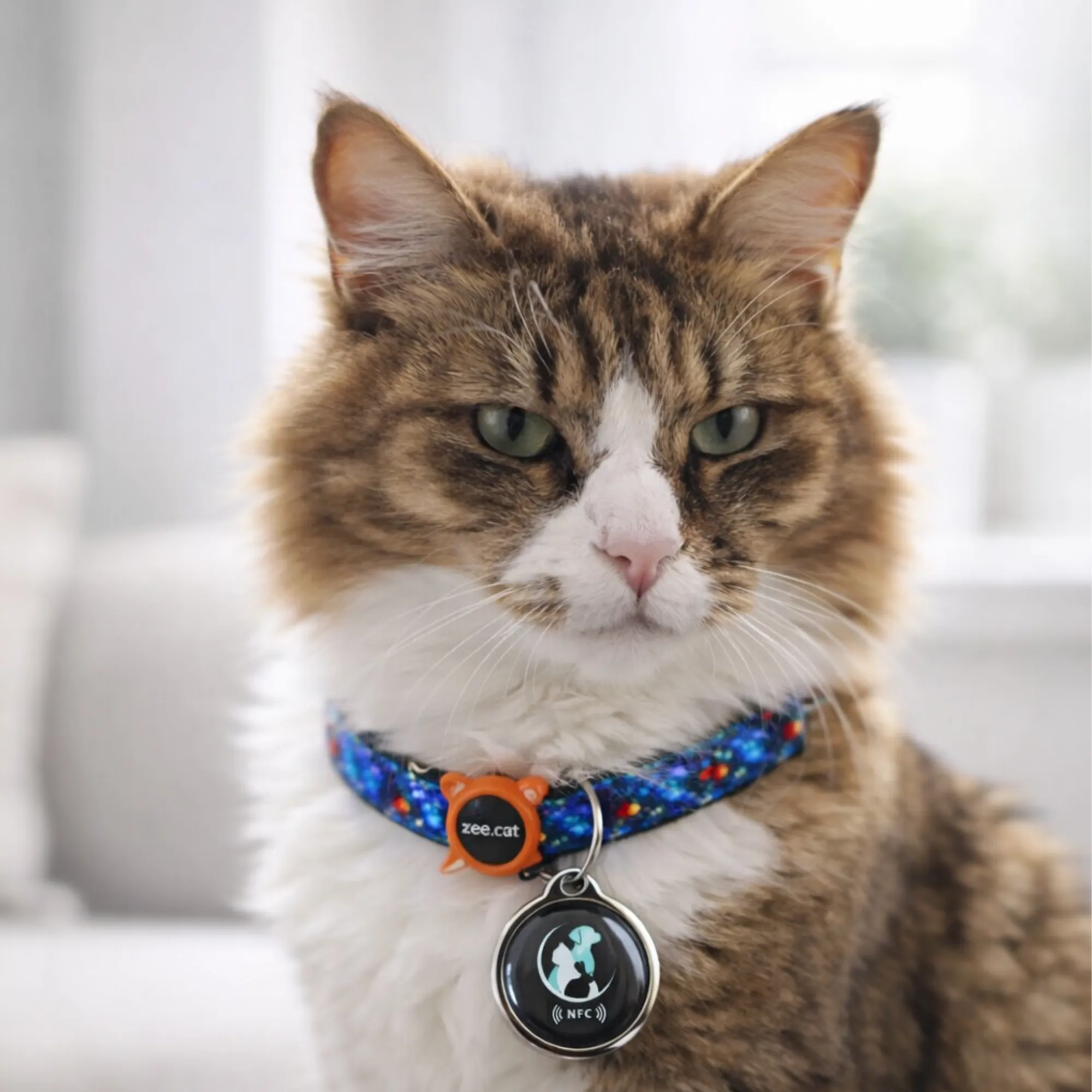
If you use an NFC pet tag, anyone who scans it can immediately see your contact information.
Municipality registration keeps you compliant with the law.
PetsGuide registration helps you reunite faster.
They serve different purposes — and together, they create real protection.
Why This Matters in the UAE
The UAE has a large expat population. People move frequently. Phone numbers change. Pets travel between emirates.
Relying only on a basic system isn’t always enough.
Responsible pet ownership in the UAE today means:
Legal compliance.
Up-to-date medical records.
Digital visibility.
Community awareness.
The more connected your pet is to the right systems, the safer they are.
Final Thoughts: Do Both
If you’re a pet owner in Dubai, Abu Dhabi, Sharjah, or anywhere in the UAE, municipality registration is not something to ignore.
It’s part of being a responsible pet parent.
But don’t stop there.
Registering your pet for free on PetsGuide.ae adds a recovery system that government registration does not provide.
One keeps you legal.
One increases your chances of getting your pet back.
And when it comes to your pet’s safety — having both simply makes sense.